Up to 40% OFF + Get an extra 12% OFF. Use Code: DHAMAL12 | Shop Now !

May 29, 2026 0 Comments
Every year on the 31st of May, countries that agree on almost nothing agree on this — that tobacco has taken enough out of people’s lives. Governments put out statements. Hospitals run campaigns. Social media fills up with infographics. And somewhere in the middle of all of it, normal people try to figure out how to quit a habit that has had years to dig itself in.
That is what World No Tobacco Day actually is, underneath all the official messaging. A reminder. A nudge. And for a lot of people, it’s a starting point.
World No Tobacco Day at its core, is a global health observance established by the World Health Organization that calls attention to the dangers of tobacco use and the steps that individuals, communities, and governments can take to reduce it. But more than a campaign, it is a reminder for tobacco users, for people around them and for policymakers, that tobacco is more than a personal choice. It is a day designed to make the conversation easier to have. With yourself. With your family. With your doctor.
"World No Tobacco Day highlights the health risks associated with tobacco use." — World Health OrganizationWorld No Tobacco Day is celebrated on May 31st, every year, without exception.
It has been that way since 1988, when the World Health Assembly - the decision-making body of the World Health Organization - formally established it.
Over the decades, it has grown into one of the most widely observed health days anywhere in the world. Each year comes with a new theme, a new angle, a new set of conversations.
No Tobacco Day did not appear out of nowhere. By the late 1980s, the evidence linking tobacco to cancer, heart disease, and a long list of other conditions became impossible to ignore.
In the midst of all of this, the WHO establishing a dedicated global day was a statement implying that we are not going to let this fade into the background. We are going to talk about it every year, loudly, until the numbers change for the better. And the numbers indeed have shifted; global tobacco user rates have come down over the decades. But we are nowhere near done. Tobacco still kills more than eight million people a year worldwide. That is not a statistic that lets you look away.
"Tobacco kills more than 8 million people each year globally." — World Health OrganizationMost people who experience tobacco urges already know that it is bad for them. They have known for years. So why does awareness still matter?
Because knowing something intellectually and actually understanding what it is doing to your body are two very different things. And because the people who need to be reached most are often not adults who have been dependent on tobacco for a decade but they are teenagers who are just starting, before the habit has had a chance to become an addiction.
"Most tobacco users start during adolescence or early adulthood." — Centers for Disease Control and PreventionBy the time someone is 35 and wants to quit, this habit has had ten to fifteen years to rewire things. The craving often does not just remain psychological but becomes physical. It is tied to routines and emotions and social situations in ways that a single moment of willpower cannot undo. For this person, awareness means understanding why it is so hard to stop and not being told to just stop.
There is almost no part of the body that tobacco leaves alone.
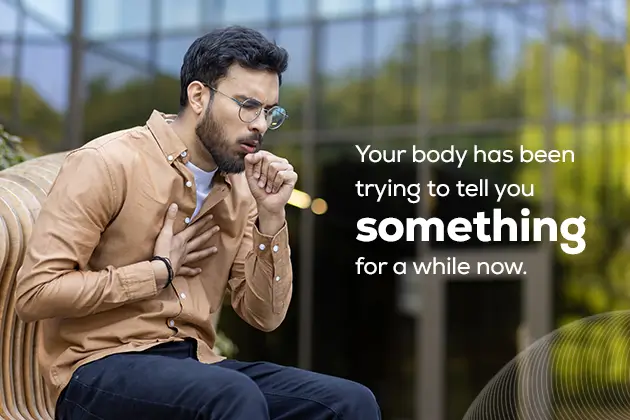
Long-term use has been linked to cancers, cardiovascular disease, respiratory illness, and oral health problems.
The heart and blood vessels are heavily affected. Tobacco accelerates the build-up of plaque in arteries. It raises blood pressure. It makes the blood more likely to clot. Heart attacks and strokes become significantly more likely, often years before any visible symptoms.
The mouth, throat, and oesophagus are hit early. Staining, gum disease, and ulcers show up first. Oral cancers follow for long-term users.
Skin ages faster. Fertility takes a hit in both men and women. Pregnancies become higher-risk.
And then there is the mental health side which does not get talked about enough. Consuming tobacco gives you a brief hit of dopamine, which is why the first packet of the day feels like relief. But over time, it raises baseline anxiety levels. It messes with mood regulation. People who quit often report, after the first few difficult weeks, that their anxiety improved significantly. The cigarette was not fixing the stress, it was creating a new kind of it.
Learn more about the impact of tobacco on your health in our blog: How Tobacco Affects Your Body
Quitting tobacco is genuinely hard. Biology works against you. The habit is tangled up with stress, routine, and social situations. And a lot of people find that the most difficult part is not the first day or the first week. It is the random Tuesday three weeks in when something stressful happens and the craving hits out of nowhere and there is nobody around who actually understands what that feels like.
If No Tobacco Day feels personal to you, use it as a statement. Write it down. Tell one person. Look up what nicotine replacement therapy involves - because for most people, trying to quit is not that easy and there are real, science-backed options that make it considerably easier.
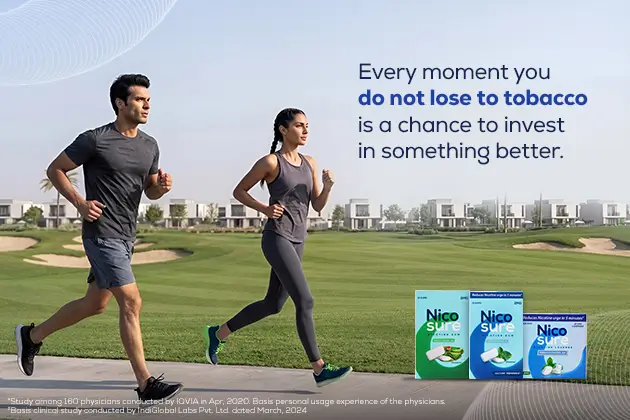
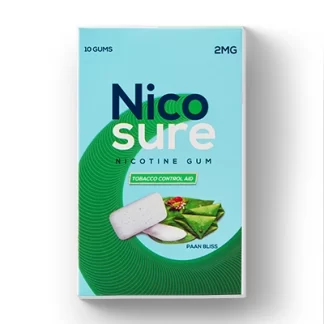
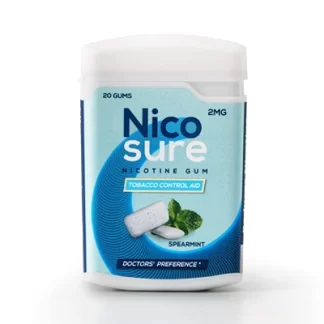
Products like Nicosure Nicotine Gum and can help manage cravings and support your quit journey more effectively.
If someone you love consumes tobacco, this is a good day to have the conversation you have been putting off. Not with an ultimatum. Not with a list of statistics. Just honestly, from a place of caring about them.
If you are an employer, a teacher, a healthcare worker, use the day as a prompt to do something practical. A resource on the noticeboard. A conversation. An employee wellness programme that actually addresses tobacco. Something concrete.
World No Tobacco Day will come and go like every other day if you let it. The campaigns will run, the infographics will be shared, and by the next day, the conversation will have mostly moved on.
But for some people, it will be the day they actually decide to try. And for those people, everything matters — the information they find, the support available to them, whether the first step feels manageable or impossible.
That is what Nicosure is trying to change. With a presence that stays through the craving, the relapse, the quiet victories nobody else notices.
If this is your year, you do not have to do it alone.. Nicosure is there. And May 31st is as good a day as any to begin.




Your cart is empty
Browse Products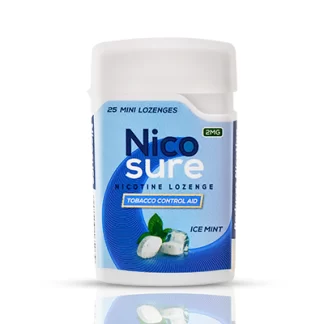
(200 pieces)
(60 pieces)
(160 pieces)