Up to 40% OFF + Get an extra 12% OFF. Use Code: DHAMAL12 | Shop Now !


September 26, 2026 0 Comments
Smokeless tobacco has a reputation for being safer, where people believe that since it's no smoke, no tar, it’s safe. Just a pinch of khaini after lunch, a habit so common in parts of this country that it barely registers as a health concern.
That's the problem.
Khaini, gutka, zarda, mawa, pan masala with tobacco are all smokeless tobacco products and most people who use them daily have never once sat down to think about what they're actually putting in their mouth.
Smokeless tobacco is tobacco consumed without burning it. Instead of going into the lungs, it sits against the tissue of the mouth, the cheeks and gum, and the chemicals, nicotine included, get absorbed directly into the bloodstream from there. Which sounds less alarming than smoke going into the lungs. Until you understand what those chemicals are doing to the tissue they're sitting against, every single day, for years.
The other thing worth knowing upfront is that the nicotine concentration in many smokeless tobacco products is higher than in cigarettes. Which is why people who use them often find the dependency harder to shake than they expected.
The side effects of chewing tobacco build gradually, but they don't stay quiet for long.
The side effects of chewing tobacco are not cosmetic footnotes. They're early signals. The question is whether you catch them early enough to do something about them.
If the side effects are what you notice in the mirror, the real health risks are what you can’t see.
Every time smokeless tobacco sits in the mouth, nicotine is being absorbed into the bloodstream in significant amounts. Heart rate goes up. Blood pressure goes up. For someone using multiple times a day, every day, that's a cardiovascular system under sustained stress it was never designed to handle.
The oral complications compound over time. Gum tissue breaks down. The bone structure supporting the teeth deteriorates. What looks like gum sensitivity in the early years becomes serious dental damage later on.
The effects of chewing tobacco accumulate in a way that's easy to dismiss year by year and impossible to ignore decade by decade.
Year one looks like staining and bad breath. Year three looks like gum recession and the beginning of sensitivity. Year seven looks like white patches and a dentist who's starting to ask serious questions. Year fifteen looks like outcomes nobody planned for when they first picked up the habit.
The slow build is what makes chewing tobacco dangerous in a specific way: it gives the habit time to deepen before the consequences are visible enough to feel urgent.
By then, the long-term effects are well underway. Gum disease that progresses to bone loss and tooth loss. Leukoplakia that progresses to oral cancer. A cardiovascular system that's been under sustained stress for years, developing into something that requires real medical intervention.
Oral cancer specifically is where smokeless tobacco causes disproportionate damage. Cancer of the cheek, the tongue, the floor of the mouth, the gum. These are not rare outcomes for long-term users. They are well-documented, well-researched consequences of sustained smokeless tobacco use.
The dangers of chewing tobacco are no less serious than those of other forms of tobacco.
The product sits in direct contact with the mouth, gums, and oral tissues for long periods, the damage tends to concentrate exactly there, showing up as staining, gum recession, and tissue changes that build quietly over time.
People who switch to smokeless tobacco thinking they've made a safer choice have really just changed the location of the damage.
There's also a belief that traditional, homemade versions of khaini or raw tobacco are somehow cleaner than manufactured products. They aren't. The carcinogens are in the tobacco leaf itself. Processing changes things slightly. It doesn't change the fundamental risk.
Quitting smokeless tobacco is hard. Harder than a lot of people expect, because the nicotine concentration is high and the habit is woven into the day in a very specific, physical way. The mouth misses it. The routine misses it. The post-meal moment misses it.
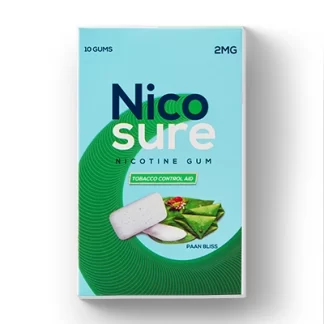
The nicotine dependency is where NRT comes in. Nicosure gum and lozenges can help manage withdrawal by delivering controlled doses of nicotine that reduce the intensity of cravings while you work on breaking the behavioural habit. The two things need to be tackled together. Trying to address only one of them is why a lot of quit attempts don't hold.
Tell someone you're trying. Have a plan for the hard moments before they arrive. Know your triggers. The person who quits with support is significantly more likely to stay quit than the person who tries to white-knuckle it alone.
Smokeless tobacco doesn't get the attention it deserves as a health crisis, partly because it's so normalised and partly because the damage it causes takes years to become undeniable. But the health risks of smokeless tobacco are as real and as serious as any other form of tobacco use.
The side effects of chewing tobacco begin in the mouth. But the damage doesn't end there. It can affect the heart, the esophagus, and the pancreas. The nicotine in smokeless tobacco also creates a strong dependence, making it harder to quit than most people expect.
The damage isn't inevitable forever. But it keeps building for as long as the habit continues. And the earlier that stops, the better the outcome.




Your cart is empty
Browse Products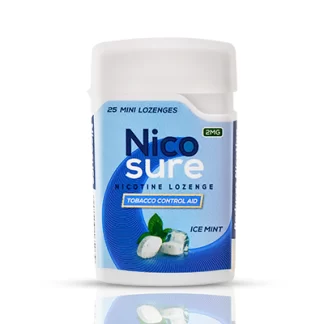
(200 pieces)
(60 pieces)

(160 pieces)