Up to 40% OFF + Get an extra 12% OFF. Use Code: DHAMAL12 | Shop Now !


September 26, 2026 0 Comments
It often happens that, when someone tells you their age, your brain quietly does a double-take, because their face doesn't match the number. Most people blame stress. Or bad sleep. Or just genetics. But often it's neither. It's tobacco, and most people never make the connection because nobody thinks about looking for the cause there.
It's not really anyone's fault. The warnings on every tobacco product talk about lungs and hearts, cancer, things that feel distant until they're not. Nobody puts "this will make you look ten years older" on the packaging, even though it's just as true, and arguably the one consequence people would notice every single day, every time they look in a mirror.
That's the strange thing about this kind of damage. It doesn't announce itself the way a cough does, or chest pain. It just shows up slowly, in the kind of details only a mirror catches, a little duller, a little more lined, until one day someone pulls out an old photo and the difference is suddenly impossible to miss.
Skin runs on blood flow. Tiny vessels just under the surface feed it oxygen and nutrients, constantly, so it can keep repairing itself. Tobacco narrows those vessels and less blood gets through. Over time, those changes begin to show on the skin.
Then there's also collagen. It's what keeps skin bouncing back. Tobacco breaks it down faster than your body can rebuild it. Less collagen, less bounce, and wrinkles show up years before they should've. Over time, tobacco accelerates the skin's natural aging process, making it look older than it should.
Wrinkles deepen first around the mouth and eyes. The complexion gets dull. It doesn’t necessarily look bad, just tired in a way that doesn't match how much sleep someone's getting.
Uneven tone shows up next. Patchy, slightly gray in places, inconsistent across the face. Same root cause, different symptoms.
None of this comes suddenly. It builds for years, until someone pulls up an old photo and says, "wait, when did that happen?"
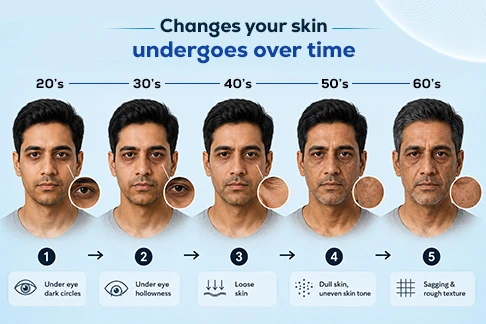
Tobacco consumption doesn't age your skin through just one process. It disrupts several of the systems that keep skin healthy, firm and able to repair itself.
First, oxidative stress. Tobacco floods your system with free radicals. Those free radicals damage cells, including skin cells. Your body fights this naturally, sure, but tobacco use outruns those defenses, and the imbalance becomes visible.
Second, slower healing. A small cut. A blemish. Even your skin's normal turnover. All of it takes longer when blood flow is compromised.
Third, collagen damage reduces your skin's elasticity. Skin without elasticity doesn't spring back. That's the actual difference between a fine line that fades on its own and one that just stays.
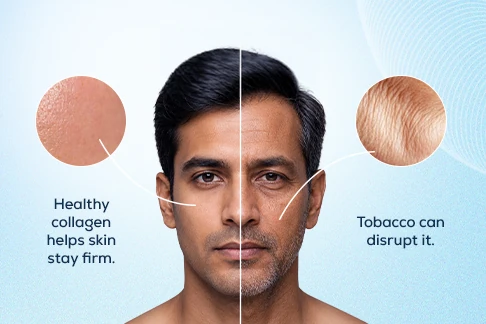
It's not just the face. Though that's where people notice it first.
Teeth yellow faster than age alone explains. It's one of the more obvious markers, and it builds gradually, just like everything else on this list.
Hair takes a hit too, because the same reduced blood flow reaching your face also reaches your scalp. Follicles starved of nourishment tend to put out thinner, weaker strands over time.
The eye area usually goes first, though. Because the skin around the eyes is thinner, the effects of repeated movement and reduced circulation tend to show up there sooner than on the rest of the face. Crow's feet. Hollowing under the eyes. Both tend to show up early in long-term tobacco users.
Once you stop, blood vessels that have narrowed start opening back up. Circulation improves. Oxygen and nutrients start reaching the skin properly again, in some cases for the first time in years.
How fast you see this depends on how long and how heavily someone used tobacco, but a lot of people notice better tone and texture within a few weeks. Collagen catches up slower, because rebuilding collagen takes longer than improving circulation. The deepest wrinkles may not disappear completely, but healthier circulation and renewed collagen production can noticeably improve your skin's tone and texture over time.
A few simple habits can help protect your skin during recovery and support the healing process.
Skin doesn't really lie, even when you wish it would. Tobacco use writes itself onto a face clearly, over time. But that story isn't permanent. Circulation comes back. Collagen production picks up again. Dullness fades. None of it happens overnight, but recovery begins sooner than most people expect.
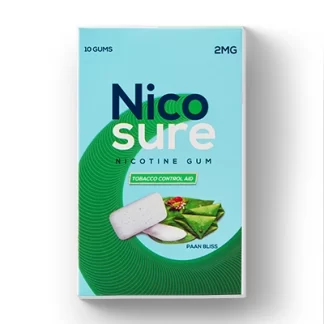
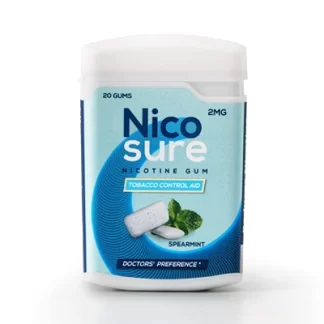
If you're mid-quit and the mirror isn't being kind yet, hold onto that. The repair starts the second you stop adding to the damage. And if cravings are what's making that harder, Nicosure nicotine gums and lozenges can help take the edge off while your body gets to work repairing itself.




Your cart is empty
Browse Products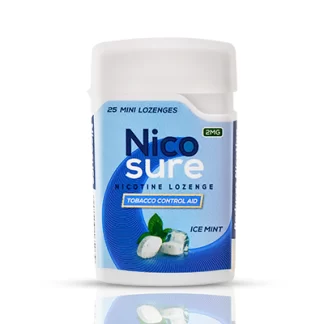
(200 pieces)
(60 pieces)
(160 pieces)