Up to 40% OFF + Get an extra 12% OFF. Use Code: DHAMAL12 | Shop Now !

July 26, 2026 0 Comments
There is no single cause for tobacco usage. Most people do not start using tobacco because they want to become addicted. It often begins with curiosity, peer pressure, social situations, stress, or the simple desire to fit in. What starts as occasional use can gradually become a habit that feels difficult to control over time. Understanding the different causes for tobacco usage can help explain why quitting is often challenging and why many people struggle to break the cycle.
“Tobacco use is responsible for more than 8 million deaths worldwide each year.” – World Health Organization
This is one of the biggest reasons for using tobacco, especially among teenagers and young adults.
Imagine this:
You are at a party. Everyone around you is trying something new. Someone says, “Come on, just once.”
That “just once” often becomes the beginning.
Many people use tobacco because they do not want to feel left out. Social acceptance can sometimes feel more important than long-term health risks.
Humans are naturally curious. When people constantly see tobacco in movies, social media, or around friends, they begin wondering:
“What does it feel like?”
Curiosity may seem harmless, but for some people, experimenting with tobacco can become the first step toward regular use.
Sometimes, tobacco use becomes linked with certain lifestyles or identities. People may associate it with looking mature, confident, relaxed, or rebellious.
Family habits also matter. If someone grows up in an environment where tobacco use is common, it can start feeling “normal.”
Even though this article does not focus only on smoking, the same emotional connection applies to many other forms of tobacco use.
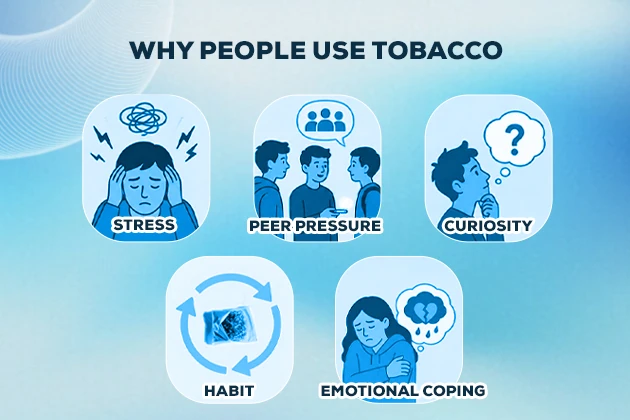
The reasons people continue using tobacco are often different from the reasons they started.
Many people believe tobacco helps them relax.
Bad day at work? Tobacco.
Fight with someone? Tobacco.
Feeling overwhelmed? Tobacco.
The brain begins linking tobacco with relief.
Tobacco often becomes tied to routines:
After repeating the same behavior enough times, the brain stops asking why and simply expects it.
That is how habits quietly take over daily life.
Sometimes, the environment itself becomes the trigger.
A certain café.
A stressful office meeting.
A group of friends.
Even a specific song or smell.
The brain remembers associations very well. That is why cravings can appear suddenly, even after someone has tried quitting.
The relationship between tobacco and mental health is more complicated than most people realize.
Many people use tobacco when they feel anxious, stressed, lonely, or emotionally drained. At first, nicotine may create a short-lived sense of calm. But over time, it often increases emotional instability instead of reducing it.
Many people use tobacco during stressful situations because it creates a brief sense of relief or distraction. However, the source of stress usually remains unchanged. While tobacco may offer a short break from uncomfortable emotions, it does not address the underlying problem. Over time, relying on tobacco during difficult moments can make it harder to develop healthier coping strategies.
Think of nicotine like borrowing happiness on credit.
You feel better briefly, but the brain eventually “asks for repayment” through cravings, mood swings, and dependency.
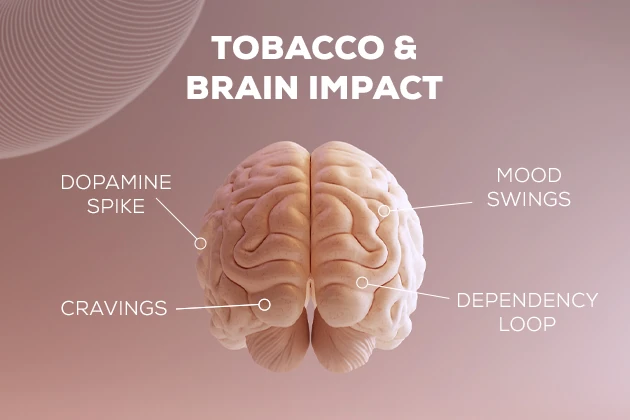
The mental effects of tobacco are powerful because they directly involve the brain’s reward system.
Nicotine triggers dopamine release, often called the “feel-good chemical.”
Every time tobacco is used, the brain gets rewarded with a quick burst of pleasure. The brain then remembers:
“This feels good. Let’s do it again.”
That is how dependency forms.
Over time, repeated tobacco use can strengthen the connection between nicotine and everyday emotions. As the brain begins to expect tobacco during certain moments, urges may feel automatic and more difficult to resist.
The mental effects of nicotine can affect mood, concentration, and emotional balance.
Cravings are one of the strongest mental effects of nicotine.
They can appear suddenly and feel extremely intense, even if they only last a few minutes.
Triggers may include:
When nicotine levels fall, people may experience:
This happens because the brain is adjusting to functioning without nicotine stimulation.
Irritability can make everyday situations feel more challenging. Small inconveniences may seem more frustrating, especially when someone is trying to cut down or quit tobacco use.
This is one of the biggest questions:
If people know tobacco is harmful, why continue?
The answer is addiction.
Many people assume tobacco use is simply a matter of choice. However, quitting is often more complicated. Factors such as habits, emotional associations, social environments, and nicotine dependence can all make it difficult to stop, even when someone understands the risks.
“Nicotine is highly addictive and can lead to sustained tobacco use despite harmful consequences.” – National Institutes of Health
That means continuing tobacco use is not simply about lacking discipline.
Many people continue using tobacco despite understanding the risks because nicotine affects the brain's reward system.
Some people find it easier to transition using tools like Nicosure lozenges during high-craving moments, especially when trying to break emotional or routine-based tobacco habits.
Quitting becomes easier when you understand your personal triggers.
Start noticing:
Awareness is powerful.
The brain dislikes empty spaces. Replacing routines works better than simply “stopping.”
Examples:
Small replacements create big changes over time.
Recovery becomes easier with support.
Talk to:
You do not have to handle cravings alone.
The reasons behind tobacco use are deeply human. People turn to tobacco because of stress, curiosity, habits, emotions, social influence, or the temporary comfort nicotine provides.
But understanding the cause for tobacco usage helps break the cycle.
The brain can heal.
Habits can change.
Cravings do fade.
The journey may not be instant, but every small step towardS a tobacco-free life matters.




Your cart is empty
Browse Products
(200 pieces)

(60 pieces)

(160 pieces)