Up to 40% OFF + Get an extra 12% OFF. Use Code: DHAMAL12 | Shop Now !


December 15, 2025 0 Comments
If you’ve ever tried to quit tobacco and suddenly craved a puff out of nowhere, maybe after coffee, during stress, or while chatting with friends, congratulations, you’ve just met your tobacco triggers.
These little cues sneak up on you when you least expect them. They whisper, “just one last time,” even when your rational brain says, “no way.” Understanding what triggers tobacco craving is half the battle; learning to avoid nicotine triggers is how you win.
Let’s unpack the psychology behind cravings, the common triggers, and how to outsmart them (without locking yourself indoors).
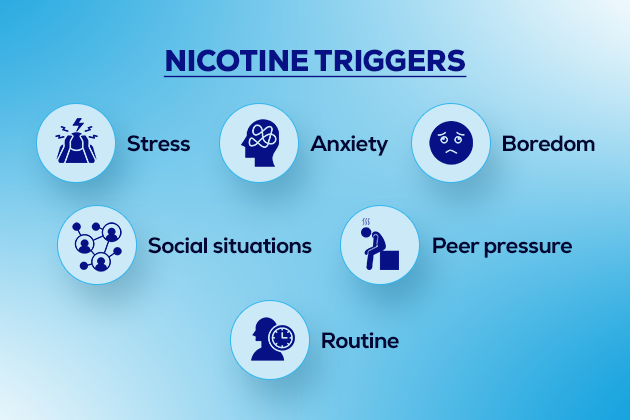
Source: truthinitiative
Simply put, tobacco triggers are situations, emotions, or habits that remind your brain of tobacco.
They can be:
When you quit, your body starts healing, but your brain? It’s still holding onto those mental associations. That’s why certain moments feel like mini-ambushes from your nicotine past.
According to the World Health Organization (WHO), nicotine rewires the brain’s reward system. Every time you light up, your brain releases dopamine, that “ahh” feeling. Over time, it links tobacco to comfort or relief.
Here are some of the most common tobacco triggers:
Nicotine cravings usually last 3–5 minutes, not forever (even if it feels like it). According to the Centers for Disease Control and Prevention (CDC), recognizing and managing triggers is one of the most effective ways to stay tobacco-free.
When you avoid your triggers or replace the habit with a healthier cue, your brain slowly unlearns its old associations, a process called “extinction.”

Now that you know what causes those cravings, here’s how to keep them under control:
Let’s not forget the emotional side. Sometimes you don’t crave tobacco itself, you crave what it symbolizes: control, comfort, or a quick escape.
Experts from the Ministry of Health and Family Welfare (MoHFW) note that emotional regulation is key to staying tobacco-free. Recognizing when you’re stressed, tired, or anxious helps you take action before the craving hits.
Try the HALT method, ask yourself if you’re Hungry, Angry, Lonely, or Tired before you reach for tobacco. It’s simple but surprisingly effective.
Knowing your tobacco triggers is like knowing your enemy’s playbook. The more you understand your cues, the better you can outsmart them.
Quitting tobacco isn’t about willpower alone, it’s about strategy, awareness, and compassion for yourself. Replace old patterns with new rituals, use tools like Nicosure Nicotine Gums and Lozenges, and remember: each time you say “no,” your brain rewires a little more toward freedom.
Because being tobacco-free isn’t just about avoiding tobacco, it’s about taking your power back.




Your cart is empty
Browse Products
(200 pieces)

(60 pieces)

(160 pieces)