Up to 40% OFF + Get an extra 12% OFF. Use Code: DHAMAL12 | Shop Now !


January 21, 2026 0 Comments
Quitting tobacco is not just a physical journey. It is an emotional, mental supportive tools, and a deeply personal one too. While tools and support systems matter, sometimes the most powerful help comes from within. That is where journaling steps in. A simple notebook or digital note can become your strongest ally during tobacco cessation.
A tobacco journal gives your thoughts a place to land, your struggles a voice, and your progress a record. It helps you slow down, reflect, and stay intentional about your quit journey. If you have ever felt overwhelmed while trying to quit tobacco, journaling might be exactly what you need.
A tobacco journal is a personal space where you write about your relationship with tobacco and your efforts to quit. There are no rules, no perfect formats, and no right or wrong entries. It can be as structured or as free-flowing as you want.
Some people use a quit tobacco journal to track cravings emotional, mental and triggers. Others use it to express emotions, vent frustrations, or celebrate milestones. The goal is simple: to create awareness. When you write things down, patterns become clearer and progress becomes visible.
Think of your tobacco journal as a judgment-free zone that exists purely to support you.
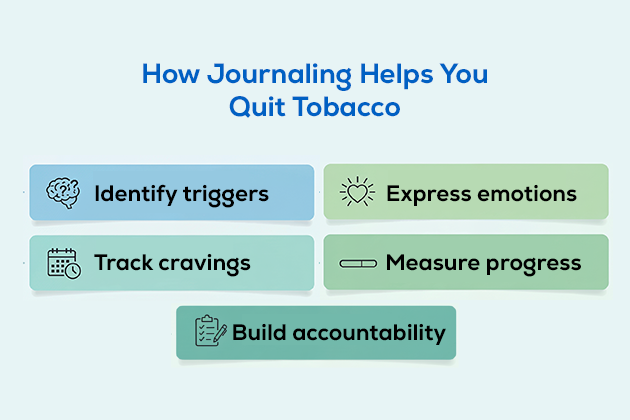
Quitting tobacco often feels chaotic. Cravings come and go, moods shift, and motivation can fluctuate. A tobacco cessation journal brings order to that chaos.
Writing helps you pause before reacting. Instead of acting on an urge, you write about it. That small pause can make a big difference. Journaling also helps you understand why cravings occur. Is it stress, boredom, habit, or social situations? Once you know your triggers, you can plan around them.
Many people combine journaling with practical aids like Nicosure nicotine gums and lozenges, using their journal to note when cravings hit and how well these tools helped manage them.
The mental side of quitting tobacco is often underestimated. Journaling helps address this head-on.
First, it reduces stress. Writing things out clears mental clutter and creates emotional relief. Second, it builds self-awareness. You begin to notice patterns in your behavior and thoughts, which helps you respond more thoughtfully.
Journaling also boosts self-belief. Seeing days, weeks, and milestones written down reminds you that you are capable of change. Over time, your journal becomes proof of resilience, not just a record of struggle.
Starting is easier than you think. You do not need fancy stationery or a perfect routine. All you need is honesty and consistency.
Choose a medium you enjoy. It could be a notebook, a notes app, or a journaling app. Decide when you will write. Morning reflections, evening check-ins, or short entries during cravings, all work.
Set a simple intention. Your journal exists to support your quit journey, not to judge it. Even short entries matter. A few honest lines a day can have a powerful impact over time.
If you like structure, tracking specific details can be helpful. Here are some useful things to include in your tobacco journal:
You can also track tools you use, such as Nicosure nicotine gums and Nicotine lozenges, noting when they helped reduce urges or made certain situations easier to manage.
If staring at a blank page feels intimidating, prompts can help. Try rotating a few of these daily:
Prompts keep journaling fresh and meaningful, even on days when motivation feels low.
The benefits of journaling go far beyond writing itself. Over time, a tobacco journal helps you build emotional resilience. You learn to sit with discomfort rather than react impulsively.
It also improves accountability. When you write honestly, it is harder to ignore patterns or make excuses. Progress becomes tangible, which boosts confidence and commitment.
Another underrated benefit is perspective. On tough days, flipping back to earlier entries reminds you how far you have come. This perspective can be incredibly motivating during moments of doubt.
If you want a simple starting point, here is an easy daily template you can follow:
Date:
Mood Today:
Cravings Experienced:
Triggers Noticed:
What Helped Me Today:
One Win for the Day:
Thoughts or Reflections:
You can adapt this template as you go. Some days you may write one line. Other days, you might write a full page. Both count.
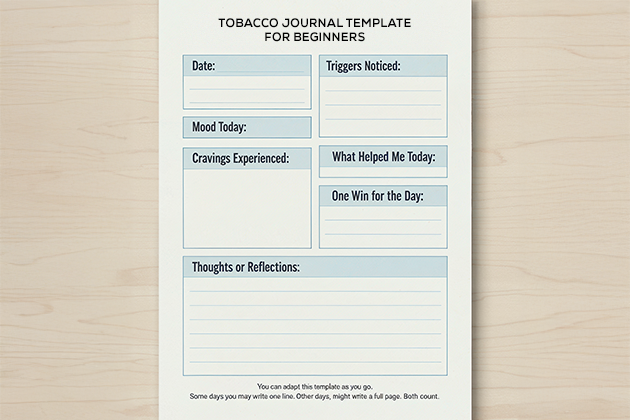
Many people also note supportive tools they used, such as Nicosure nicotine gums or lozenges, alongside emotional coping strategies. This helps you understand what combination works best for you.
Journaling is not about writing beautifully. It is about writing honestly. Your tobacco cessation journey deserves reflection, patience, and self-compassion, and a journal helps you practice all three.
A quit tobacco journal becomes a quiet companion that listens without interrupting and reminds you of your strength when things get tough. Combined with the right support and tools, journaling can transform quitting from a struggle into a deeply empowering experience.
Your journey matters. Write it down.




Your cart is empty
Browse Products
(200 pieces)

(60 pieces)

(160 pieces)