Up to 45% OFF + Get an extra 12% OFF. Use Code: DHAMAL12 | Shop Now !

Up to 45% OFF + Get an extra 12% OFF. Use Code: DHAMAL12 | Shop Now !
Please rotate your device

June 18, 2025 0 Comments

How Can Exercise Help You To Fight Nicotine Urges?

Quitting nicotine is a challenging journey, but incorporating exercise into your routine can make the process easier. Exercise offers both physical and psychological benefits that help curb nicotine urges and reduce withdrawal symptoms. Whether you're trying to quit tobacco or using smokeless tobacco, engaging in regular physical activity can play a crucial role in managing urges and maintaining a healthy lifestyle. Smokers who exercise regularly often find it easier to resist cravings and stay committed to quitting.

How Does Exercise Reduce Nicotine Urges?

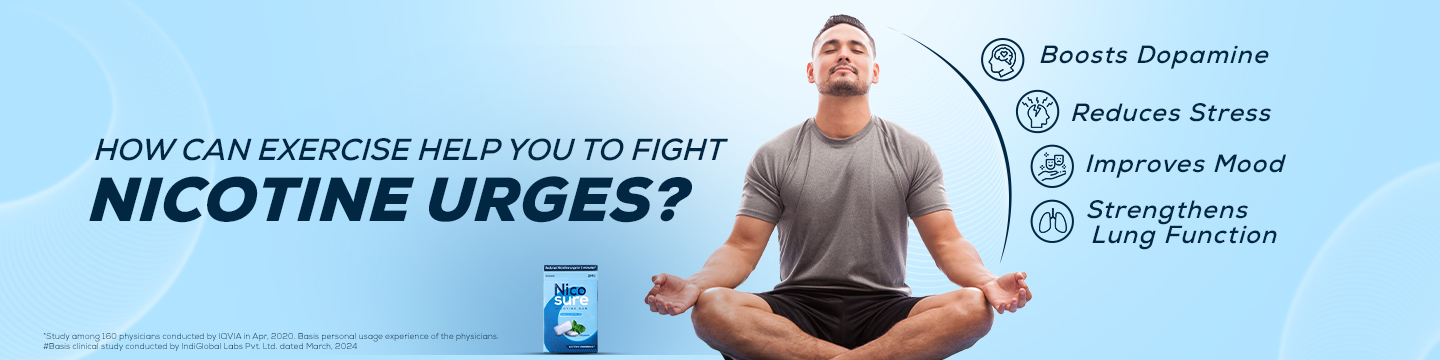
How does exercise Reduce Nicotine Urges

Nicotine urges arise due to the brain's dependency on dopamine, a neurotransmitter that creates feelings of pleasure and reward. When you quit nicotine, your brain struggles to produce dopamine naturally, leading to withdrawal symptoms such as irritability, anxiety, and intense urges. Smoking and exercise are closely linked. While smoking depletes dopamine levels, exercise acts as a natural dopamine booster, providing a similar sense of pleasure and reducing the severity of urges.

Additionally, exercise helps by:

  • Reducing Stress: Physical activity releases endorphins, which help relieve stress and anxiety, two common triggers for nicotine urges.
  • Improving Mood: Exercise combats mood swings associated with nicotine withdrawal, making it easier to stay committed to quitting.
  • Enhancing Lung Function: Lung exercises for smokers improve respiratory health, strengthen lung capacity, and help counteract the damage caused by tobacco use.
  • Distracting the Mind: Urges typically last for a few minutes. Engaging in a short workout session can effectively distract you until the urge passes.

Best Types of Exercise for Tobacco Addiction

Not all exercises are equally effective in fighting nicotine urges. The following types of workouts are particularly beneficial:

  1. Cardiovascular Exercise Activities like running, cycling, swimming, and brisk walking improve lung function, increase stamina, and help reduce withdrawal symptoms. Smoking and working out may seem contradictory, but incorporating cardio workouts can significantly speed up lung recovery.
  2. Strength Training Lifting weights and resistance training not only build muscle but also boost metabolism, keeping you physically and mentally strong while quitting tobacco. Cigarettes and exercise do not mix. By replacing tobacco with strength training, you develop a healthier routine that reinforces discipline and self-control.
  3. Yoga and Meditation Yoga combines physical movement with mindfulness, helping you manage stress and urges effectively. Breathing exercises for smokers can specifically improve lung capacity and oxygen intake, making it easier to cope with Nicotine withdrawal symptoms. Meditation enhances mental clarity, making it easier to fight cigarette cravings.
  4. High-Intensity Interval Training (HIIT) Short bursts of intense exercise followed by rest periods can be a powerful way to distract your mind from urges and improve overall fitness. If you’re struggling to fight smoking cravings, HIIT workouts can help you redirect energy and focus.
  5. Outdoor Activities Spending time in nature while hiking, jogging, or cycling can provide a refreshing change and make quitting tobacco a more enjoyable experience. Exercise for addiction works best when it’s engaging and enjoyable, helping you stay consistent.

Psychological Benefits of Exercise for Addiction

The mental and emotional benefits of exercise extend beyond simply managing nicotine urges. Regular exercise can:

  • Build Discipline: Sticking to a workout routine reinforces self-control, which can translate into better adherence to quitting nicotine.
  • Increase Self-Esteem: As you progress in your fitness journey, you'll feel more confident and empowered to continue your tobacco-free lifestyle.
  • Improve Sleep Quality: Nicotine withdrawal can disrupt sleep patterns, but regular exercise helps regulate your body's sleep cycle, leading to better rest and recovery.
  • Strengthen Social Support: Joining group fitness classes or engaging in team sports can provide social motivation and reduce feelings of isolation.

Creating a Workout Plan to Stay Tobacco-Free

Developing a structured workout plan can keep you focused and committed to quitting. Here’s how to build an effective routine:

  • Set Clear Goals: Define what you want to achieve—whether it's reducing urges, improving fitness, or maintaining mental well-being.
  • Start Small: If you're new to exercise, begin with short, manageable workouts and gradually increase intensity and duration.
  • Schedule Workouts Around Triggers: Identify times when urges are strongest and plan exercise sessions during those periods to counteract urges.
  • Stay Consistent: Make exercise a daily habit to reap long-term benefits and keep urges under control.
  • Incorporate Nicosure: For those who need additional support, using Nicosure nicotine gum alongside an exercise routine can help ease the transition by managing withdrawal symptoms while staying active.

Nicosure Nicotine Gums and Lozenges are designed to reduce withdrawal symptoms, including nicotine cravings associated with quitting smoking, quitting chewed tobacco, and gutkha containing tobacco.

Benefits of Exercise When Quitting Nicotine

Conclusion

Exercise is a powerful tool in the journey to quitting nicotine. By reducing urges, improving mood, and providing a natural dopamine boost, physical activity can make the quitting process more manageable. Whether it's running, yoga, or weight training, finding an exercise you enjoy can significantly increase your chances of staying tobacco-free. Pairing your fitness routine with Nicosure nicotine gum can further support your efforts, ensuring a smoother transition to a healthier, nicotine-free life. If you're looking to quit, start moving today and take the first step towards lasting freedom from tobacco.

Frequently Asked Questions

  1. How does exercise help with nicotine withdrawal?

    Exercise reduces nicotine withdrawal symptoms by releasing endorphins, which improve mood and reduce stress. Physical activity also helps curb cravings, distracts from urges, and improves lung function. Regular exercise, combined with Nicosure, can make the quitting process smoother by minimizing withdrawal discomfort.

  2. What are the best exercises to reduce urges?

    Cardio exercises like running, cycling, and swimming are great for reducing cravings. Strength training, yoga, and deep breathing exercises also help manage stress and nicotine withdrawal. Activities that keep both the body and mind engaged, such as dancing or hiking, can effectively divert attention from tobacco urges.

  3. Can too much exercise increase urges?

    Excessive exercise can sometimes increase stress and fatigue, which may trigger cravings instead of reducing them. It's important to maintain a balanced workout routine and not overstrain the body. Staying hydrated, eating well, and using Nicosure can help manage energy levels and keep urges under control.

  4. How soon after quitting tobacco should one start exercising?

    You can start light exercises like walking or stretching immediately after quitting tobacco. Gradually increasing intensity over days or weeks helps improve lung capacity and overall health. For those who practise smoking, exercise routines, including cardio and breathing exercises for smokers, can speed up detoxification, reduce withdrawal symptoms, and make the transition to a tobacco-free life easier.